class: title, center, middle # Arab Musical Styles  ### Christopher Witulski, Ph.D. ### College of Musical Arts --- # Outline * Classical styles * The *takht* ensemble and its instruments * The *maqam* system * Mass media, dance, and the cinema * Music and Arab nationalism * Influence of/on global pop styles --- # What do we know about the region? .image-100[] --- # What do we know about the region? * History * Language * Religion * Politics --- # Classical Style * Developed during the Abassyd period * 12th century-ish * *Maqam* system * "Modal" system, like many others (*raga* in India, *major* and *minor*) * Contains structures and expectations * Extra-musical elements * *Taqsim*: solo improvisation exploring the maqam * Longer melodic phrases * Heterophonic textures --- class: middle, center # Takht Instruments --- .left-column[ ## Darbouka and riqq ] .right-column[ ### Riqq solo by Lev Elman <iframe width="560" height="315" src="https://www.youtube.com/embed/qQ6ahJuw4RI?si=D3u89-2QR2PpeU-w" title="YouTube video player" frameborder="0" allow="accelerometer; autoplay; clipboard-write; encrypted-media; gyroscope; picture-in-picture; web-share" referrerpolicy="strict-origin-when-cross-origin" allowfullscreen></iframe> <!-- <video width="560" height="360" controls> <source src="/assets/riqq-solo.mp4" type="video/mp4"> <source src="/assets/riqq-solo.ogv" type="video/ogg"> </video> --> ] --- .left-column[ ## Darbouka and riqq ] .right-column[ ### Darbuka solo by Roger Kashou <iframe width="560" height="315" src="https://www.youtube.com/embed/Ru6vYX6IHUs?si=v2BBIGnSx_2CaDEU&start=17" title="YouTube video player" frameborder="0" allow="accelerometer; autoplay; clipboard-write; encrypted-media; gyroscope; picture-in-picture; web-share" referrerpolicy="strict-origin-when-cross-origin" allowfullscreen></iframe> <!-- <video width="560" height="360" controls> <source src="/assets/riqq-solo.mp4" type="video/mp4"> <source src="/assets/riqq-solo.ogv" type="video/ogg"> </video> --> ] --- .left-column[ ## Darbouka and riqq ## ʿUd ] .right-column[ .image-100[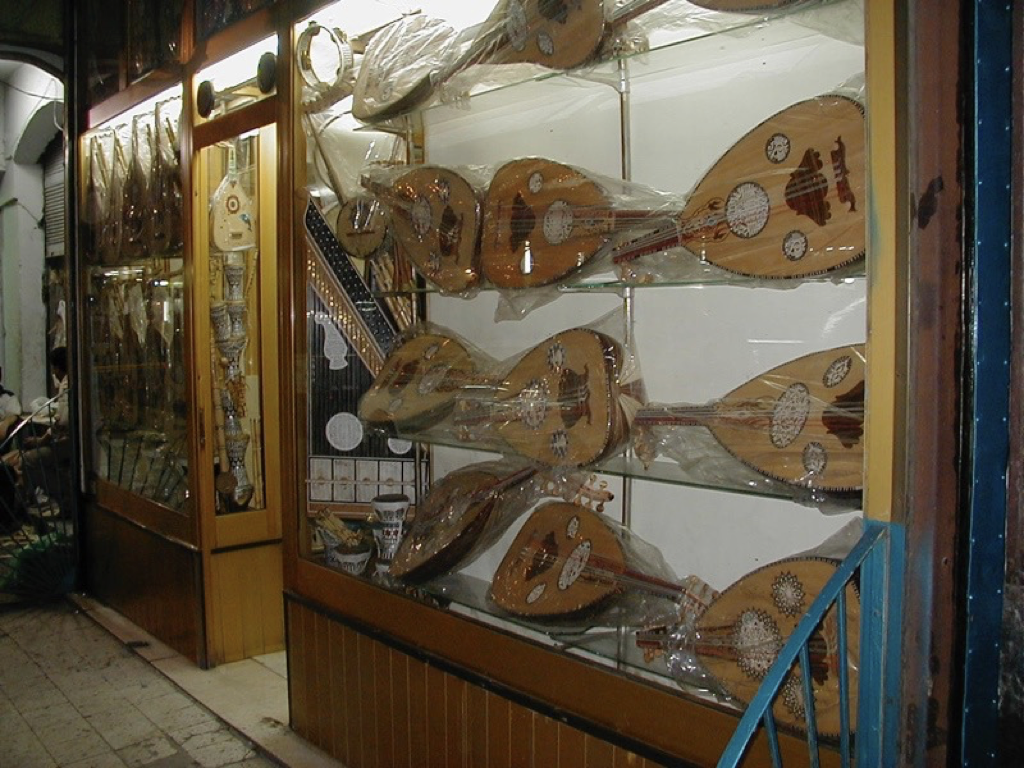] ] --- .left-column[ ## Darbouka and riqq ## ʿUd ] .right-column[ .image-100[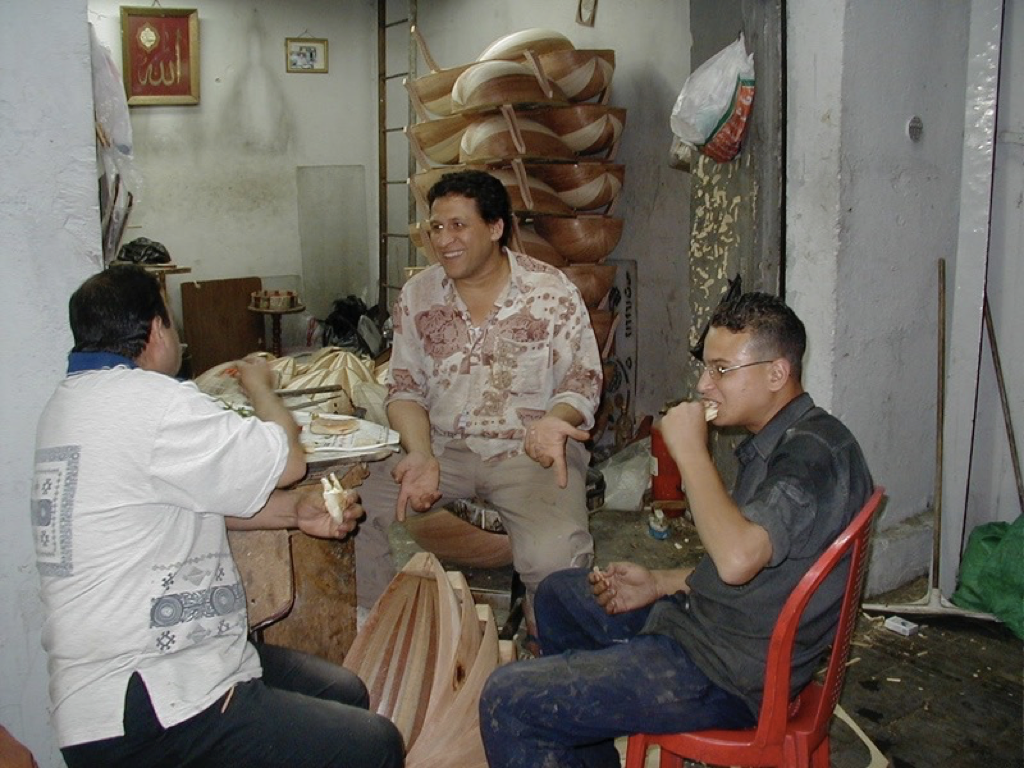] ] --- .left-column[ ## Darbouka and riqq ## ʿUd ] .right-column[ ### Victor Ghannam *taqsim* with the National Arab Orchestra <iframe width="560" height="315" src="https://www.youtube.com/embed/Bx6zMqLKmWc?si=WE75twNjxT_6CphR" title="YouTube video player" frameborder="0" allow="accelerometer; autoplay; clipboard-write; encrypted-media; gyroscope; picture-in-picture; web-share" referrerpolicy="strict-origin-when-cross-origin" allowfullscreen></iframe> <!-- <video width="560" height="360" controls> <source src="/assets/riyad-sunbati-in-kuwait.mp4" type="video/mp4"> <source src="/assets/riyad-sunbati-in-kuwait.ogv" type="video/ogg"> </video> --> ] --- .left-column[ ## Darbouka and riqq ## ʿUd ## Nay ] .right-column[ .image-50.image-float-right[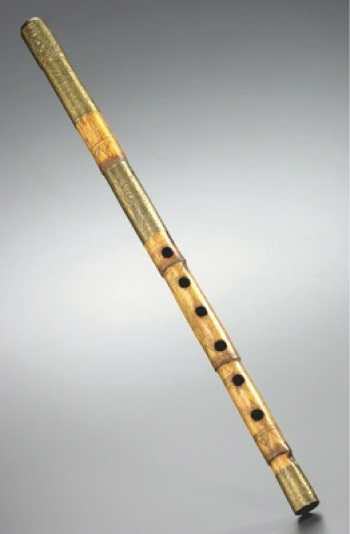] ### End blown flute * Made from bamboo * Part of a set * Open holes allow for microtones ] --- .left-column[ ## Darbouka and riqq ## ʿUd ## Nay ] .right-column[ ### Taqsim Rast, Michael Ibrahim <iframe width="560" height="315" src="https://www.youtube.com/embed/rSKKFChCjqA?si=4zv9cBwBNKR7SOq1" title="YouTube video player" frameborder="0" allow="accelerometer; autoplay; clipboard-write; encrypted-media; gyroscope; picture-in-picture; web-share" referrerpolicy="strict-origin-when-cross-origin" allowfullscreen></iframe> <!-- <video width="560" height="360" controls> <source src="/assets/taqsim-nay-rast.mp4" type="video/mp4"> <source src="/assets/taqsim-nay-rast.ogv" type="video/ogg"> </video> --> ] --- .left-column[ ## Darbouka and riqq ## ʿUd ## Nay ## Qanun ] .right-column[ .image-90[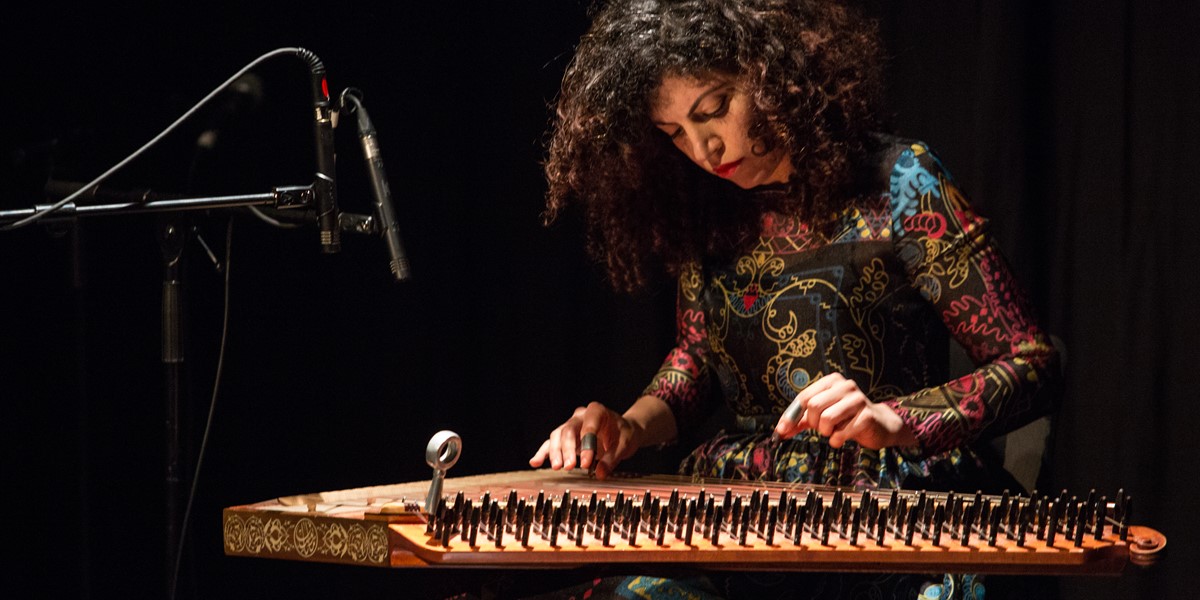] .image-50[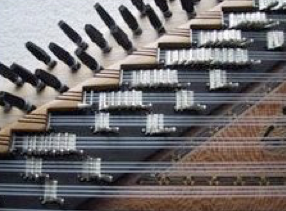] ] --- .left-column[ ## Darbouka and riqq ## ʿUd ## Nay ## Qanun ] .right-column[ ### Firas Zreik *taqsim* on *ajam* <iframe width="560" height="315" src="https://www.youtube.com/embed/JoZeQYLIb4A?si=qSXXzbwt6PvlZ0mi" title="YouTube video player" frameborder="0" allow="accelerometer; autoplay; clipboard-write; encrypted-media; gyroscope; picture-in-picture; web-share" referrerpolicy="strict-origin-when-cross-origin" allowfullscreen></iframe> <!-- <video width="560" height="360" controls> <source src="/assets/national-arab-orchestra-taqsim-qanun-ali-paris.mp4" type="video/mp4"> </video> --> ] --- .left-column[ ## Darbouka and riqq ## ʿUd ## Nay ## Qanun ## Violin ] .right-column[ ### Same Violin, called a *kaman* * Retuned to play the Arabic system more easily * Just one, traditionally, but we will see that change * Can also include cello, bass, other instruments ] --- .left-column[ ## Darbouka and riqq ## ʿUd ## Nay ## Qanun ## Violin ] .right-column[ ### Layth Sadiq, "El Helwa Di" (with a rooster!) <iframe width="560" height="315" src="https://www.youtube.com/embed/jgjLVQF-oMU?si=uPiI6XxtwOwYW3xV" title="YouTube video player" frameborder="0" allow="accelerometer; autoplay; clipboard-write; encrypted-media; gyroscope; picture-in-picture; web-share" referrerpolicy="strict-origin-when-cross-origin" allowfullscreen></iframe> <!-- <video width="560" height="360" controls> <source src="/assets/taqsim-saba-khalaf.mp4" type="video/mp4"> <source src="/assets/taqsim-saba-khalaf.ogv" type="video/ogg"> </video> --> ] --- # The *Maqam* * Structural components of huzam * Two halves: sikah (E half flat-F-G) and hijaz (G-A flat-B-C) * "Tonic" is an E half-flat * Pivot on G * Emphasized in melody * Vocal line moves between the two parts * Pre-cadential moment swaps upper half for G bayyati * Lots of other subtle shifts in verses * Pay attention to interaction between voice and orchestra --- # National Arab Orchestra: “Al-Wardi Gamil” الورد جميل وله أوراق عليها دليل من الأشواق Roses are beautiful, they have leaves that are proof of longing/love إذا أهداه حبيب لحبيب يكون معناه وصاله قريب If [a rose] is given by one lover to another, it will mean a close and steady love شوف الزهور واتعلم بين الحبايب تتكلم See the blooms and learn to speak to your lover شوف واتعلم Watch and learn --- # National Arab Orchestra: “Al-Wardi Gamil” .center[ <iframe width="560" height="315" src="https://www.youtube.com/embed/S_kEHv-Sa88?si=Dc4Jb4GiFLGoSYQ2" title="YouTube video player" frameborder="0" allow="accelerometer; autoplay; clipboard-write; encrypted-media; gyroscope; picture-in-picture; web-share" referrerpolicy="strict-origin-when-cross-origin" allowfullscreen></iframe> <!-- <video width="560" height="360" controls> <source src="/assets/nao-wardi-gamil.mp4" type="video/mp4"> <source src="/assets/nao-wardi-gamil.ogv" type="video/ogg"> </video> --> ] --- # Egyptian Cinema .image-float-right[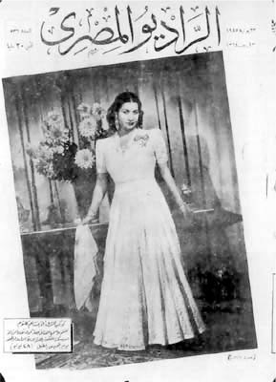] * Growth through the 40s-60s * Significance in regional and national identities * Pan-Arabism * Balancing *asil* and *hadith* * Tarab singer (*mutriba*) * Ecstatic song, invoked response * *Samaʿa* * “Innovation” in musical style * Expansion of takht ensemble (*firqa*) * Use of operatic harmonies --- class: middle, center <iframe width="560" height="315" src="https://www.youtube.com/embed/sFyStCw6wqI?si=FSFy8VURnI5krk8v" title="YouTube video player" frameborder="0" allow="accelerometer; autoplay; clipboard-write; encrypted-media; gyroscope; picture-in-picture; web-share" referrerpolicy="strict-origin-when-cross-origin" allowfullscreen></iframe> <!-- <video width="560" height="360" controls> <source src="/assets/mohamed-abd-al-wahab-ashek-el-ruh.mp4" type="video/mp4"> <source src="/assets/mohamed-abd-al-wahab-ashek-el-ruh.ogv" type="video/ogg"> </video> --> ### Mohamed Abd al-Wahab: “Ashek el-Ruh" --- class: middle, center <iframe width="560" height="315" src="https://www.youtube.com/embed/kPFOEld732k?si=dCLSUnOvW2kbT3ay" title="YouTube video player" frameborder="0" allow="accelerometer; autoplay; clipboard-write; encrypted-media; gyroscope; picture-in-picture; web-share" referrerpolicy="strict-origin-when-cross-origin" allowfullscreen></iframe> <!-- <video width="560" height="360" controls> <source src="/assets/abd-al-halim-hafez-ahwak.mp4" type="video/mp4"> <source src="/assets/abd-al-halim-hafez-ahwak.ogv" type="video/ogg"> </video> --> ### Abd al-Halim Hafez: “Ahwak” --- # Changes in Dance * Hollywood influence * Back and forth of “Oriental” fashion * Samia Gamal * Mass media and nationalism * Blending of popular and elite culture * Spanish influences * “Modern” Egyptians watching “modernized” history --- class: middle, center <iframe width="560" height="315" src="https://www.youtube.com/embed/8vsNQQv6tm0?si=vR3ZPe91g-ibENbF" title="YouTube video player" frameborder="0" allow="accelerometer; autoplay; clipboard-write; encrypted-media; gyroscope; picture-in-picture; web-share" referrerpolicy="strict-origin-when-cross-origin" allowfullscreen></iframe> <!-- <video width="560" height="360" controls> <source src="/assets/samia-gamal-zeina.mp4" type="video/mp4"> <source src="/assets/samia-gamal-zeina.ogv" type="video/ogg"> </video> --> ### Samia Gamal and Farid El Atrache, film clip from 1952 --- # Um Kulthum * Tarab singer * Epitomized many innovations * *Takht* into *firqa* * Worked with composers who were pushing boundaries of instrumentation, harmonic motion * Heavily involved in film * From countryside * Epitomized this re-imagining of past for national/modern cultural heritage production --- # Um Kulthum: "Inta Umri" (You are my life) > Your eyes take me back to days that have left They taught me regret over the past and its wounds What I've seen before I saw you, my eye What is the wasted life for me? > You are my life, which begins with your morning light How much of my life was there before you? Oh my live, how much of my life is gone? Nor had my heart seen a single happiness before you --- class: middle, center <iframe width="560" height="315" src="https://www.youtube.com/embed/_5bIk9zH8KY?si=9qRpx-F6Udo0kV2q" title="YouTube video player" frameborder="0" allow="accelerometer; autoplay; clipboard-write; encrypted-media; gyroscope; picture-in-picture; web-share" referrerpolicy="strict-origin-when-cross-origin" allowfullscreen></iframe><!-- <video width="560" height="360" controls> <source src="/assets/inta-umri.mp4" type="video/mp4"> <source src="/assets/inta-umri.ogv" type="video/ogg"> </video> --> ### Umm Kulthum: “Inta Umri" 0:00 - Muqaddima 4:10-7:30 - Umm Kulthum enters with refrain --- # Contemporary Pop .image-float-right.image-40[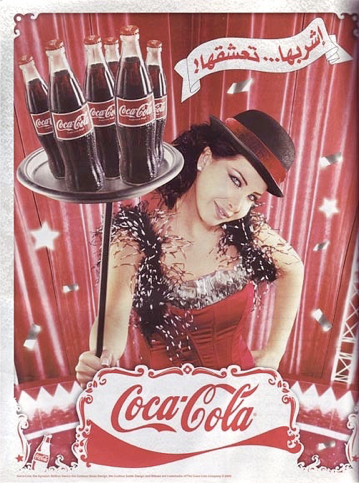] * Social contexts * Coffee shops, music videos, concerts, etc. * Nancy Agram * First “pop superstar” --- class: title, center, middle # Arab Musical Styles  ### Christopher Witulski, Ph.D. ### College of Musical Arts