class: title, center, middle # Moroccan Ritual Interactions  ### Christopher Witulski, Ph.D. ### College of Musical Arts --- # Outline * The gnawa ritual * Gaining popularity * "Mainstream" Islam * Sufi diversity * Religious interactivity --- # Morocco * Part of North Africa, Africa, Mediterranean, Middle East… Tricky to place .image-100[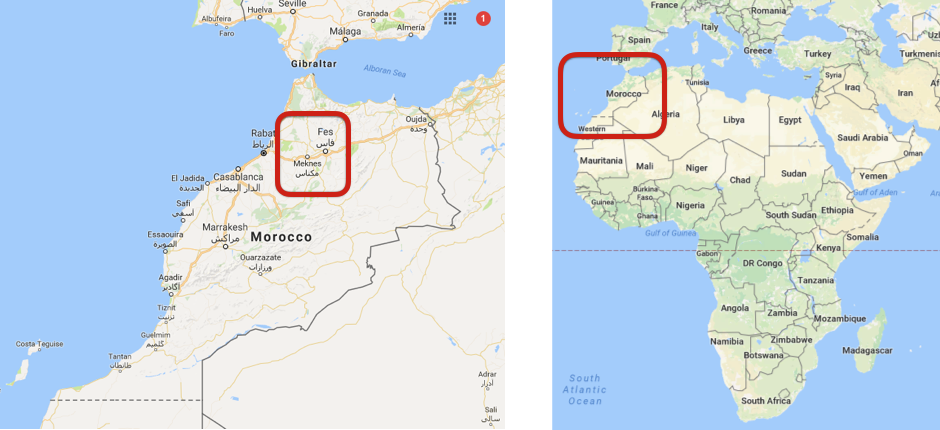] --- class: middle, center <iframe width="560" height="315" src="https://www.youtube.com/embed/4PsN346g4cY?si=GhBE3s3OWxlMpImh" title="YouTube video player" frameborder="0" allow="accelerometer; autoplay; clipboard-write; encrypted-media; gyroscope; picture-in-picture; web-share" referrerpolicy="strict-origin-when-cross-origin" allowfullscreen></iframe> <!-- <video width="560" height="360" controls> <source src="/assets/rzaq-short.mp4" type="video/mp4"> <source src="/assets/rzaq-short.ogv" type="video/ogg"> </video> --> ### Abd al-Rzaq --- .image-100[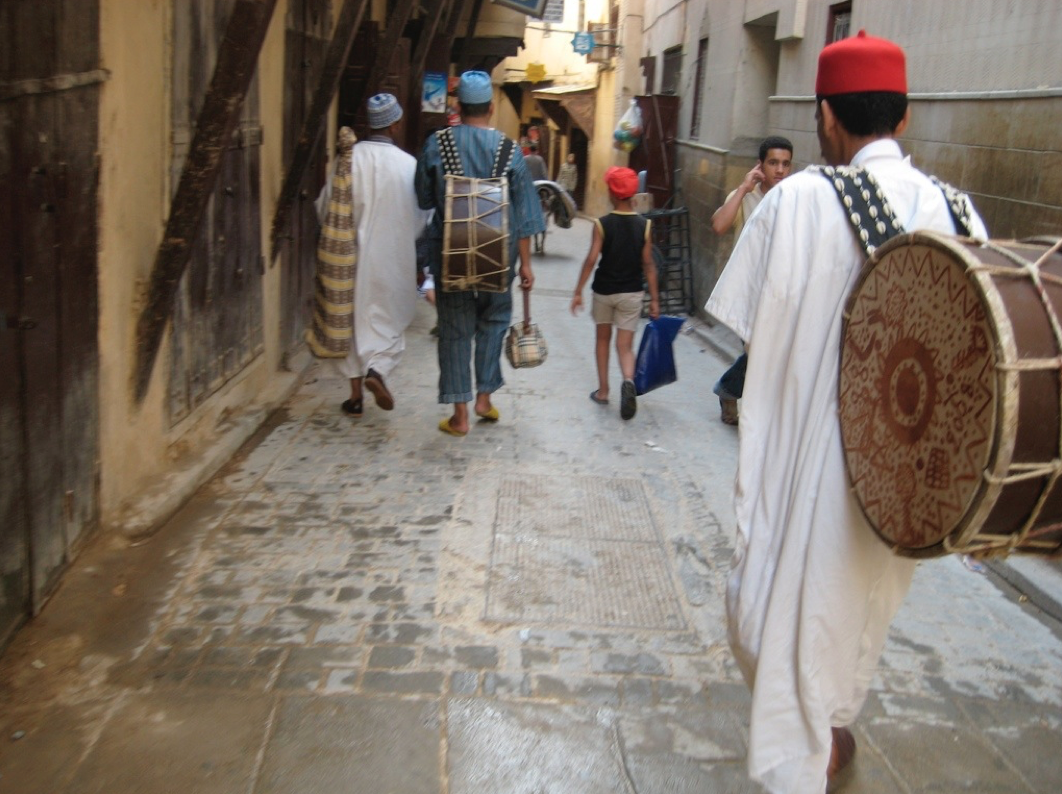] --- ### Map of trade routes and Moroccan expansion by 1600AD .image-50.image-float-right[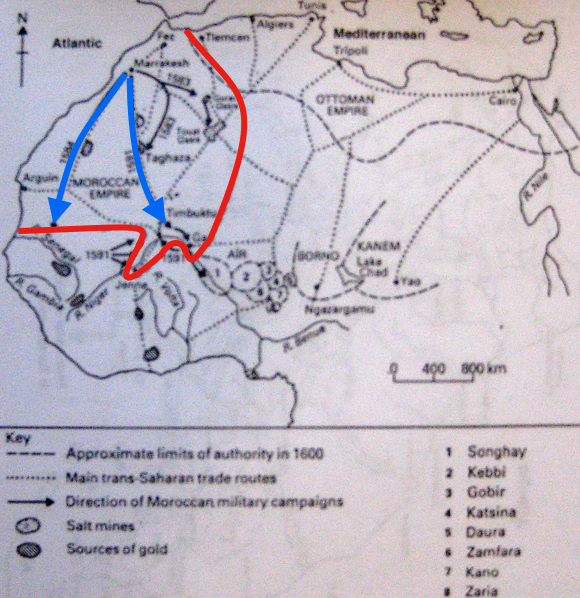] * Vast region of Moroccan authority (red line) * From the Atlantic to Senegal and the Songhay Empire * Southern military campaigns (blue arrows) * From Marrakech to Senegal and Timbuktu, 1584 and 1591 Map from D. Yahya, Morocco in the Sixteenth Century: Problems and Patterns in African Foreign Policy. Longman: 1981: xvi --- # Roles and Instruments * Mʿalem * Plays the hajhuj (ginbri) * Leads the musicians * Muqaddima (Muqaddim) * Runs the ritual * Cares for paraphernalia (incense, cloth, food) * Drari * Members of the ensemble * Sing and play quraqib and tbal --- class: center .image-90[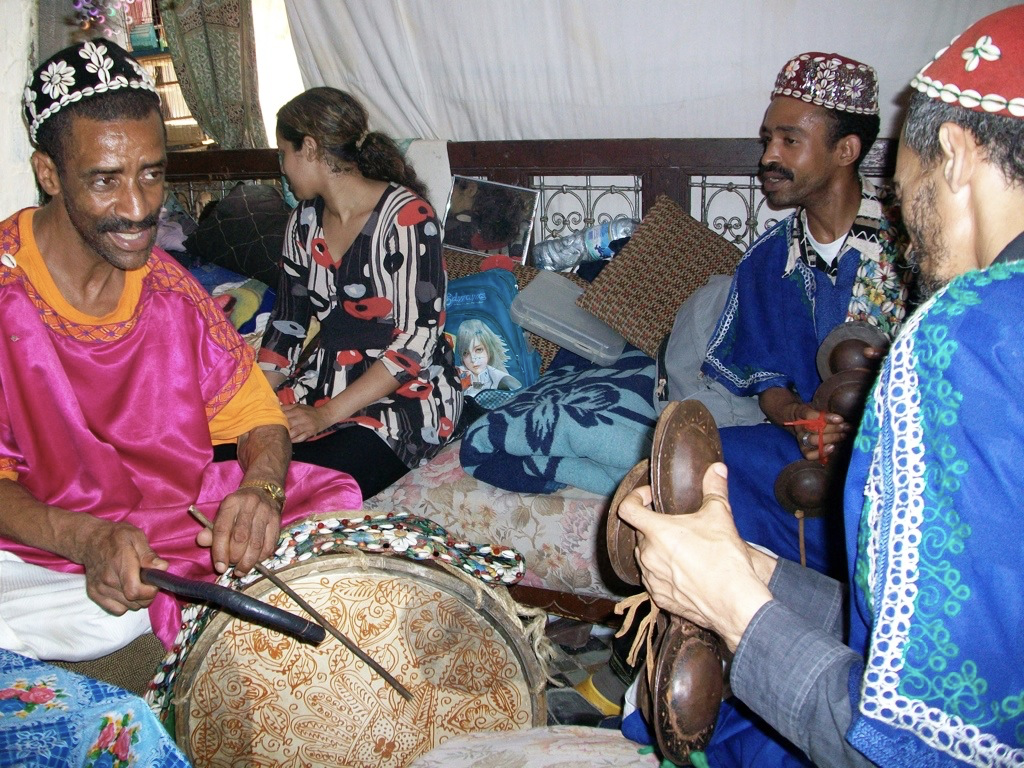] ### Mʿalem Gaga and others demonstrating the *quraqib* and the *tbal* --- class: center .image-90[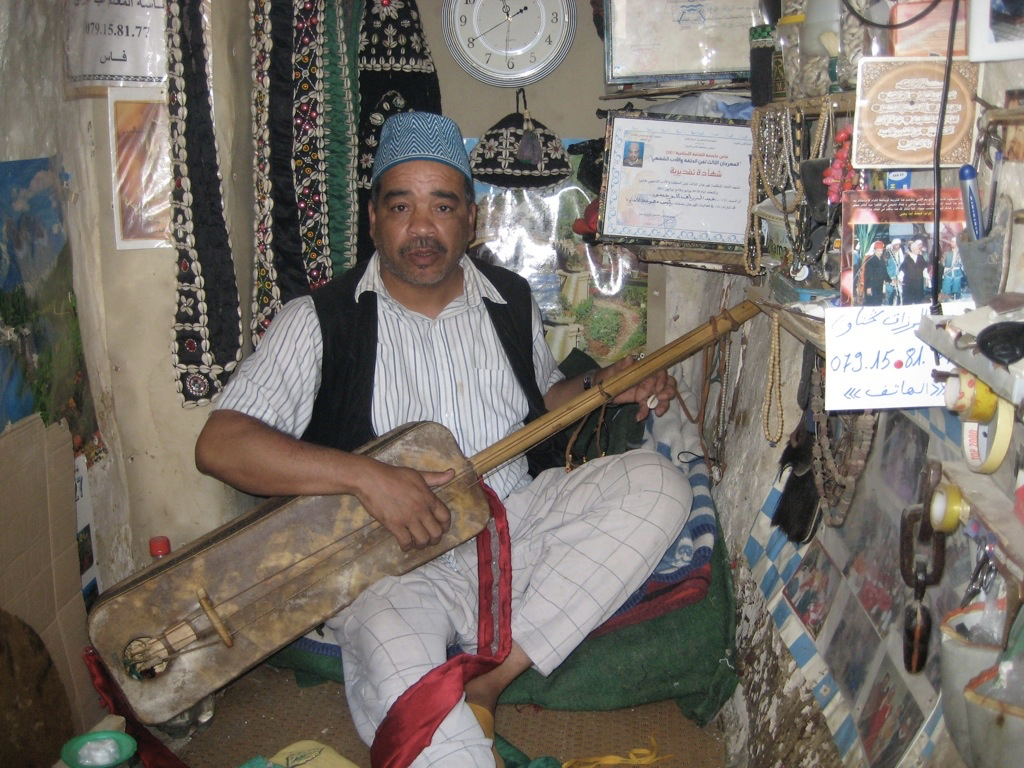] ### Mʿalem Abd al-Rahim Abd Al-Rzaq demonstrating the *hajhuj* --- # Layla Ritual * *Dakhla* (Entrance) * Enter from outside, public * Use quraqib, singing, tbal * *Fraja* (Entertainment) * Acrobatic show of dance, indoors * Use hajhuj, singing, quraqib * *Mluk* (Owners) * Mluk and maskun * Divided into sets of spirits --- class: center .image-100[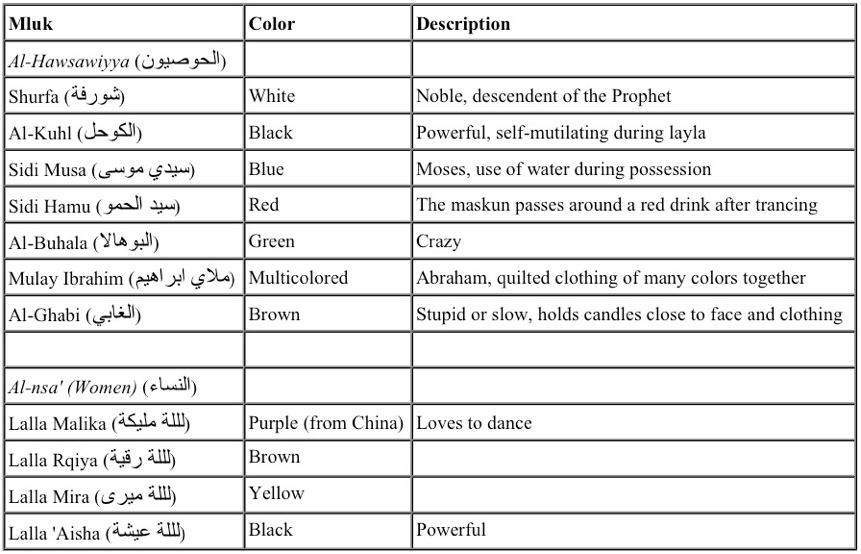] ### The fassi path through the layla ceremony --- class: middle, center <iframe width="560" height="315" src="https://www.youtube.com/embed/upQD6z_G3N4?si=2klHehhOCN0gcF5l" title="YouTube video player" frameborder="0" allow="accelerometer; autoplay; clipboard-write; encrypted-media; gyroscope; picture-in-picture; web-share" referrerpolicy="strict-origin-when-cross-origin" allowfullscreen></iframe> <!-- <video width="560" height="360" controls> <source src="/assets/la-nuit-de-la-possession-2-short.mp4" type="video/mp4"> <source src="/assets/la-nuit-de-la-possession-2-short.ogv" type="video/ogg"> </video> --> ### Mʿalem Mustapha Baqbu, trance segment from the Shurfa --- class: middle, center <iframe width="560" height="315" src="https://www.youtube.com/embed/etzzUT9_81c?si=evnImyy48gDk-0tN&start=19" title="YouTube video player" frameborder="0" allow="accelerometer; autoplay; clipboard-write; encrypted-media; gyroscope; picture-in-picture; web-share" referrerpolicy="strict-origin-when-cross-origin" allowfullscreen></iframe> <!-- <video width="560" height="360" controls> <source src="/assets/la-nuit-de-la-possession-5-short.mp4" type="video/mp4"> <source src="/assets/la-nuit-de-la-possession-5-short.ogv" type="video/mp4"> </video> --> ### Trance clip from *La Nuit de la Possession* (Sidi Mimun, candle) --- # How's this feel familiar? .center[ <br /> <br /> ### What happens when religious music gets popular Is this a good thing? ### And when popular music is used in religious services Is this a good thing? ] --- # Interactions * Examples from popular music --- class: middle, center <iframe width="560" height="315" src="https://www.youtube.com/embed/Xjdj9y7y9y0?si=mizintIKZwP3-Qt0" title="YouTube video player" frameborder="0" allow="accelerometer; autoplay; clipboard-write; encrypted-media; gyroscope; picture-in-picture; web-share" referrerpolicy="strict-origin-when-cross-origin" allowfullscreen></iframe> <!-- <video width="560" height="360" controls> <source src="/assets/nass-el-ghiwane-mahmouma.mp4" type="video/mp4"> <source src="/assets/nass-el-ghiwane-mahmouma.ogv" type="video/ogg"> </video> --> ### Nass El Ghiwane: "Mahmouma" --- class: middle, center <iframe width="560" height="315" src="https://www.youtube.com/embed/K-xymUfJCgw?si=F7mi-9YGE-7eMeUt" title="YouTube video player" frameborder="0" allow="accelerometer; autoplay; clipboard-write; encrypted-media; gyroscope; picture-in-picture; web-share" referrerpolicy="strict-origin-when-cross-origin" allowfullscreen></iframe> <!-- <video width="560" height="360" controls> <source src="/assets/hamid-el-qasri-studio-2m-2011.mp4" type="video/mp4"> <source src="/assets/hamid-el-qasri-studio-2m-2011.ogv" type="video/ogg"> </video> --> ### Malem Hamid al-Qasri: "Moulay Ahmed/Lalla Aicha" --- class: middle, center <iframe width="560" height="315" src="https://www.youtube.com/embed/ArWQWAUoiSU?si=MqtQFEJgjb5nfHxf" title="YouTube video player" frameborder="0" allow="accelerometer; autoplay; clipboard-write; encrypted-media; gyroscope; picture-in-picture; web-share" referrerpolicy="strict-origin-when-cross-origin" allowfullscreen></iframe> ### Bonobo (ft. Innov Gnawa): "Bambro Koyo Ganda" (2017) --- class: middle, center <iframe width="560" height="315" src="https://www.youtube.com/embed/5fJ9_mkhAP0?si=b3ww_kNxUTbdem71" title="YouTube video player" frameborder="0" allow="accelerometer; autoplay; clipboard-write; encrypted-media; gyroscope; picture-in-picture; web-share" referrerpolicy="strict-origin-when-cross-origin" allowfullscreen></iframe> ### Sonia Noor (ft. Asmaa Hamzaoui): "River/La Ilaha Ila Lah" (2018) --- # Interactions .image-40.image-float-right[] * Examples from popular music * Frequent borrowing from other rituals * An example from the gnawa and hamadsha .center[<audio controls="controls"> <source src="/assets/lalla-aisha-trance.wav" type="audio/wav"> </audio>] --- # Interactions * Examples from popular music * Frequent borrowing from other rituals * An example from the gnawa and hamadsha * Sidi Ali's importance for these changes * Gathering of different traditions * Ascent of the audience * Importance of appealing to wide tastes * Recognition of wide listeners * Leads to shifting ideas of authenticity... --- class: center, middle # How's this relate to what we know about Islam? --- # Pillars of Islam -- * Shahadah * “There is no god but God”: La illaha illa Allah * Salah: Daily prayers * Zakah: Almsgiving * Sawm: Fasting during Ramadan * al-Hajj: The pilgrimage to Mecca --- class: center, middle .image-100[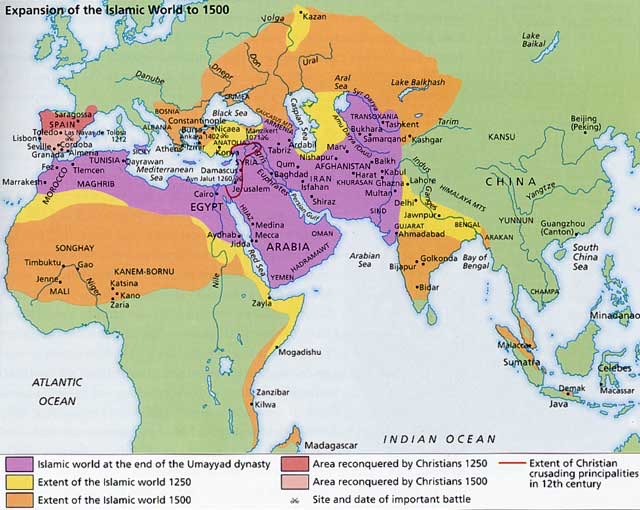] --- # Sufism * Variety of traditions, practices * This is a huge area of land * Syncretic fusions of local and Islamic (global) * “Mysticism” or “mystical” variants * Often focusing on personal connection with Allah (God) * May feature musical practices: chants, breathing * Prominent texts, like the Quran's 99 names of Allah * Local religious and musical manifestations --- # Sufi Diversity * Public variations on esoteric traditions * One of the problems with “popular Sufism” as an umbrella term * Contemporary shifts * Commercial distribution * Re-contextualization (weddings, etc.) * Changing ritual content, shifting aesthetics * Putting individual traditions in context --- # Key Terms * Tariqa: path * Zawiya: sanctuary or lodge * Dhikr: remembrance * Hal: condition * Fnaʾ: extinction * Samaʿa: listening --- class: middle, center <iframe width="560" height="315" src="https://www.youtube.com/embed/pePnhdzQ-wQ?si=Wks_S0psR801wdcb" title="YouTube video player" frameborder="0" allow="accelerometer; autoplay; clipboard-write; encrypted-media; gyroscope; picture-in-picture; web-share" referrerpolicy="strict-origin-when-cross-origin" allowfullscreen></iframe> <!-- <video width="560" height="360" controls> <source src="/assets/sufi-nights-jan-11-2006.mp4" type="video/mp4"> <source src="/assets/sufi-nights-jan-11-2006.ogv" type="video/ogg"> </video> --> ### Tariqa Harraquia: Sufi Nights at the Fez Festival (from a 2014 film) --- # Hamadsha * Traditions and history * Founded by Sidi Ali bin Hamdush * Secondary branch from Ahmed Dghughi * Practices * Layla: all night ceremony includes poetry, trance * More attention in recent years * Close relationship to Aisha * Music * Guwal, tarija, rhythmic variations of 5 * Gimbri: accompaniment string instrument .center[ <audio controls="controls"> <source src="/assets/hamadsha-descent-clip.mp3" type="audio/mp3"> </audio> (Photos follow) ] --- class: center, middle .image-100[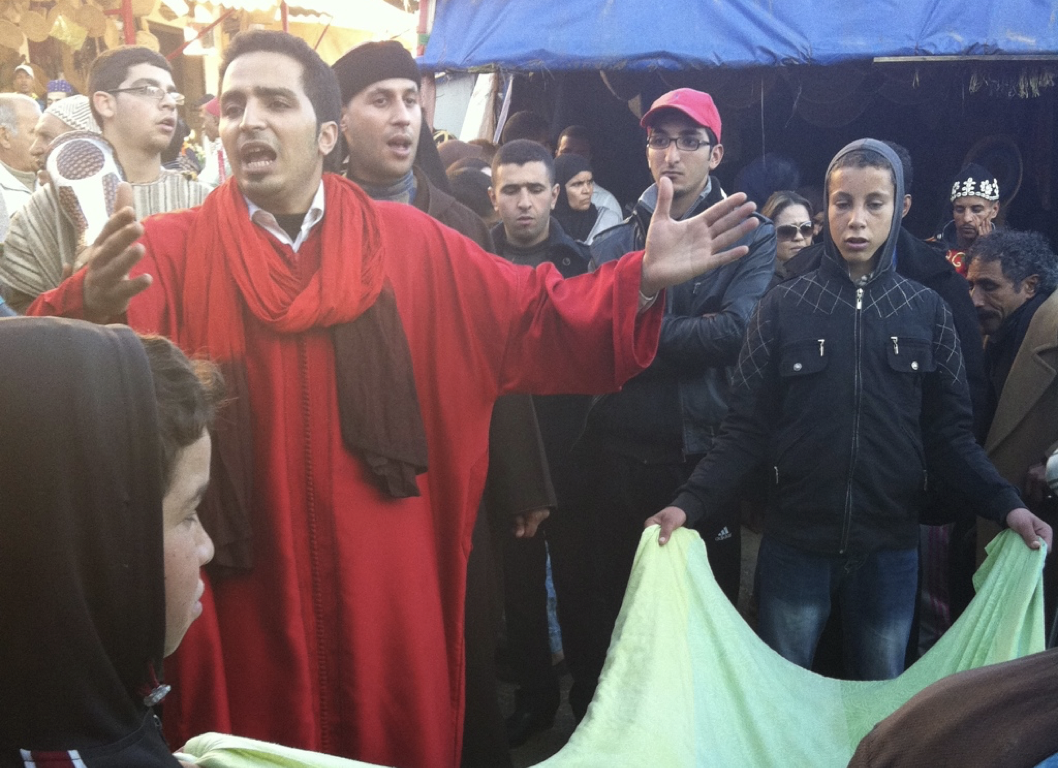] --- class: center, middle .image-100[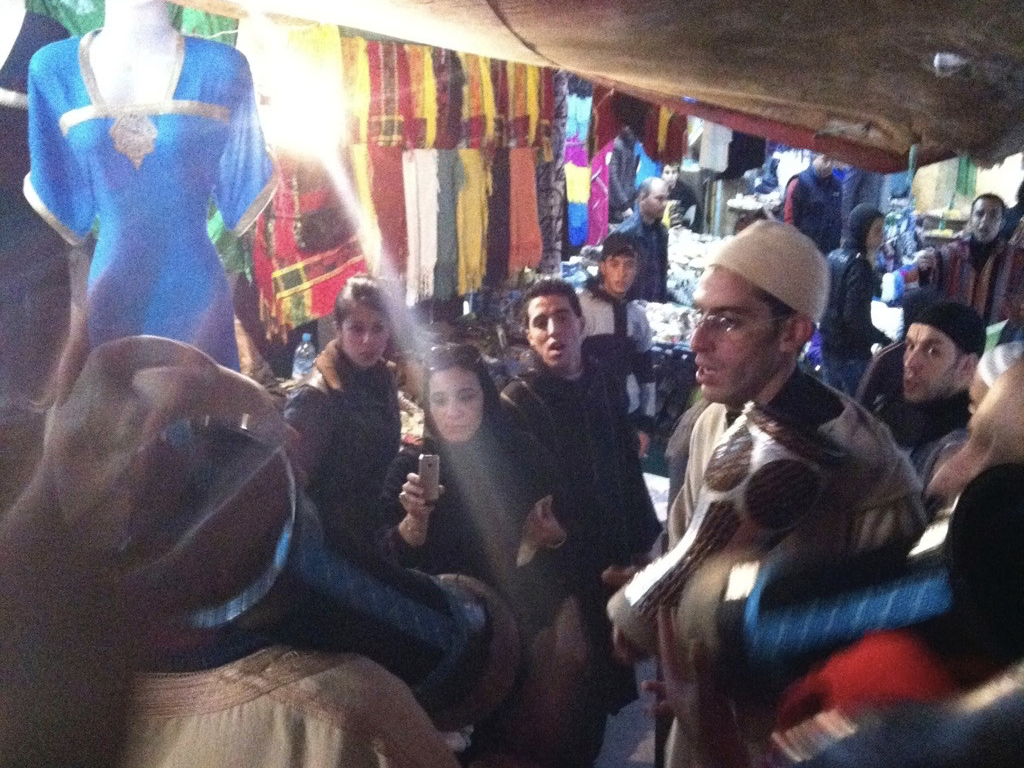] --- class: center, middle .image-100[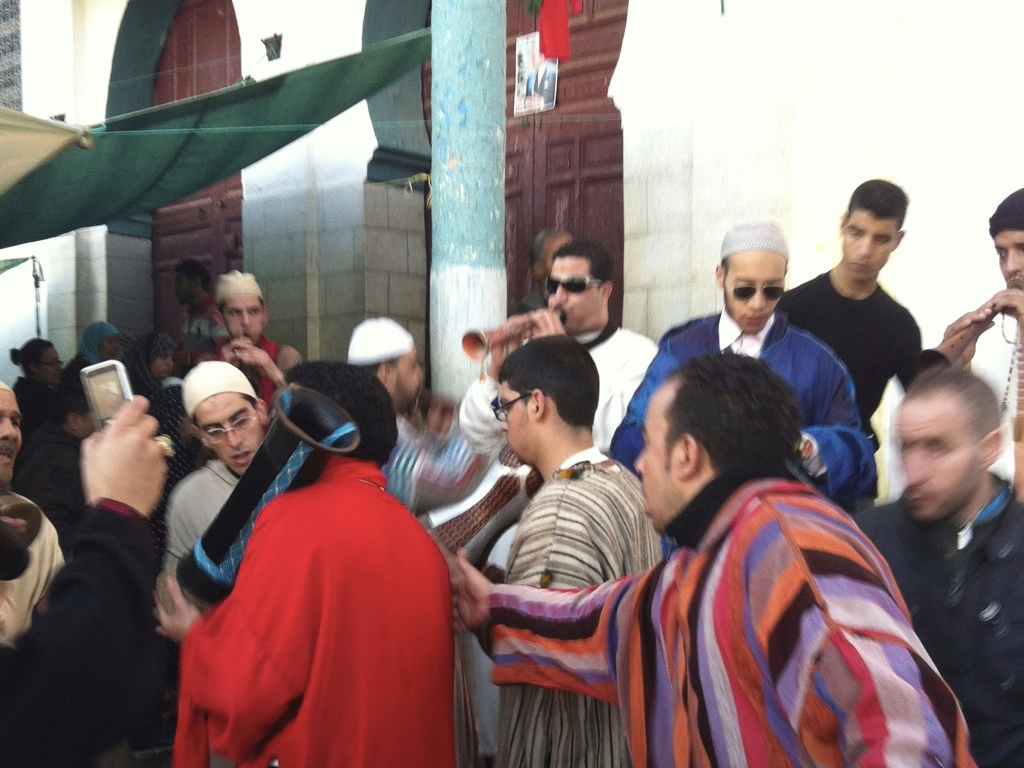] --- # "High Art" * Al-Ala, or Andalusian music * Regarded differently than “popular” sufism * Part of long history of poetry, devotion * “Natures” and “turns” * Taba: melodic system (mode) * Mizan: rhythm, set of individual pieces/poems * Nuba: “turn,” collection of pieces within one taba * Instruments * Strings (chordophones): Rabab, violins/violas, ud * Percussion: tar and darbouka --- class: middle, center <iframe width="560" height="315" src="https://www.youtube.com/embed/Ds-4d38juEE?si=kCoxHYJUUJ684WJO" title="YouTube video player" frameborder="0" allow="accelerometer; autoplay; clipboard-write; encrypted-media; gyroscope; picture-in-picture; web-share" referrerpolicy="strict-origin-when-cross-origin" allowfullscreen></iframe> <!-- <video width="560" height="360" controls> <source src="/assets/bajeddoub-quddam-al-isbihan.mp4" type="video/mp4"> <source src="/assets/bajeddoub-quddam-al-isbihan.ogv" type="video/ogg"> </video> --> ### Bajeddoub: Quddam al-Isbihan --- class: middle, center .image-30[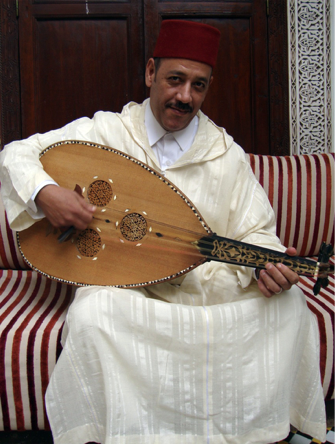] .image-60[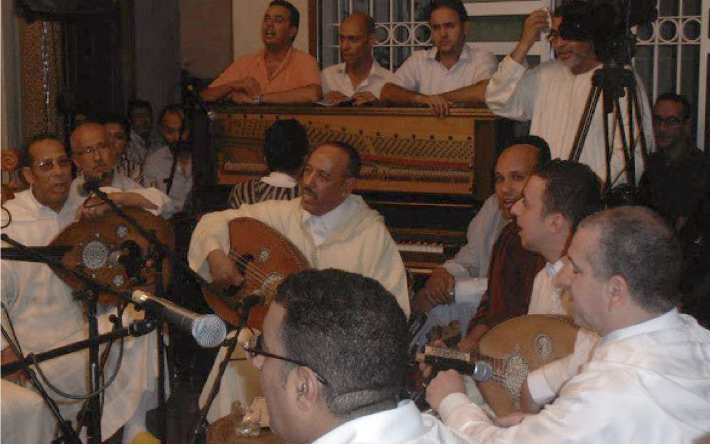] --- # Shʿabi Music * Popular music styles * Common at weddings, festivals, etc. * Rhythmically exciting patterns (like the flali rhythm) * Borrowing from sacred styles * New opportunities for performers * New sounds for audiences * How do you negotiate “appropriateness”? * Instruments * Strings (chordophones): violins/violas * Percussion: riqq and bendir * Other borrowed things! --- class: middle, center <iframe width="560" height="315" src="https://www.youtube.com/embed/bHZ1s3BlTSk?si=FIs38x8aoJfjG2JW" title="YouTube video player" frameborder="0" allow="accelerometer; autoplay; clipboard-write; encrypted-media; gyroscope; picture-in-picture; web-share" referrerpolicy="strict-origin-when-cross-origin" allowfullscreen></iframe> <!-- <video width="560" height="360" controls> <source src="/assets/hajib-nssani-nssani.mp4" type="video/mp4"> <source src="/assets/hajib-nssani-nssani.ogv" type="video/ogg"> </video> --> ### Five Stars: “Nsiba” (Shaʿbi example) --- class: middle, center <iframe width="560" height="315" src="https://www.youtube.com/embed/d4g83fbCegc?si=T6fZbrQ0ENeZ4ov0" title="YouTube video player" frameborder="0" allow="accelerometer; autoplay; clipboard-write; encrypted-media; gyroscope; picture-in-picture; web-share" referrerpolicy="strict-origin-when-cross-origin" allowfullscreen></iframe> <!-- <video width="560" height="360" controls> <source src="/assets/issawa-allah-msalli-alik-ya-rassul-allah.mp4" type="video/mp4"> <source src="/assets/issawa-allah-msalli-alik-ya-rassul-allah.ogv" type="video/ogg"> </video> --> ### ʿIssawa Pop!: "Allah Msalli Alik Ya Rassul Allah" --- class: middle, center .image-100[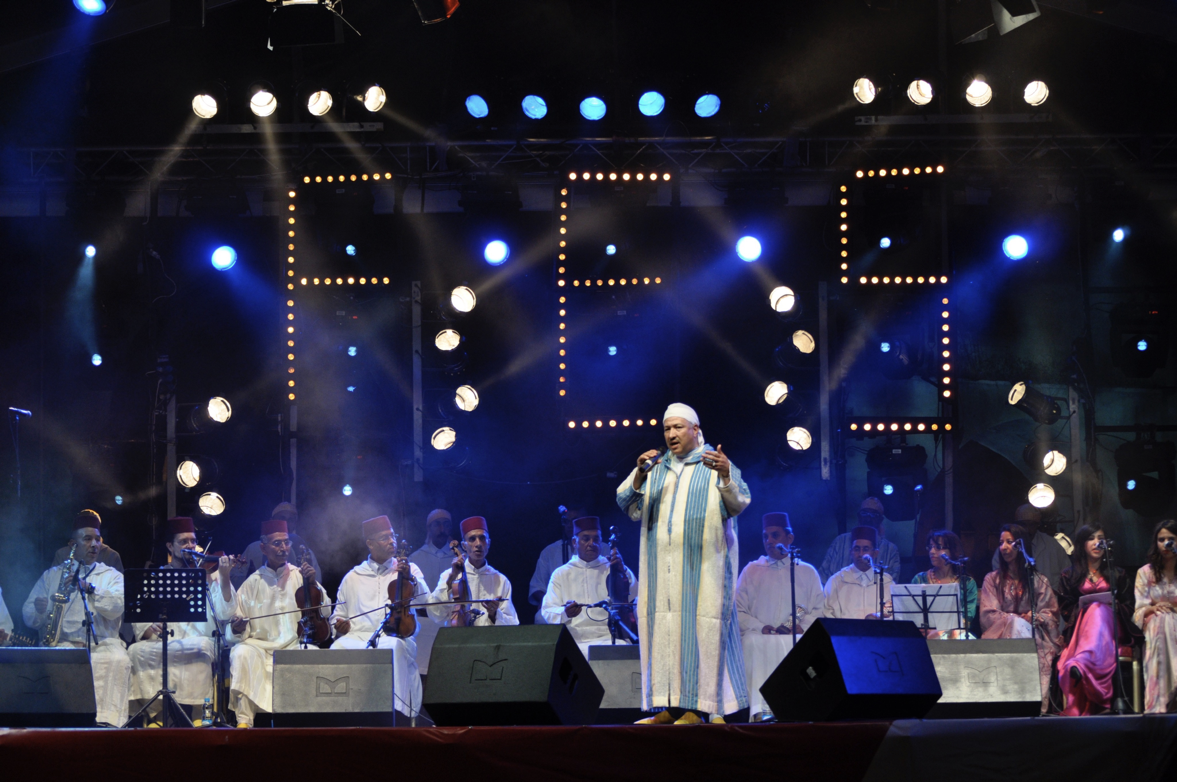] ### Muhammed Sousi performing malhun during the Fez Festival of Sacred Music (2011) --- class: middle, center .image-100[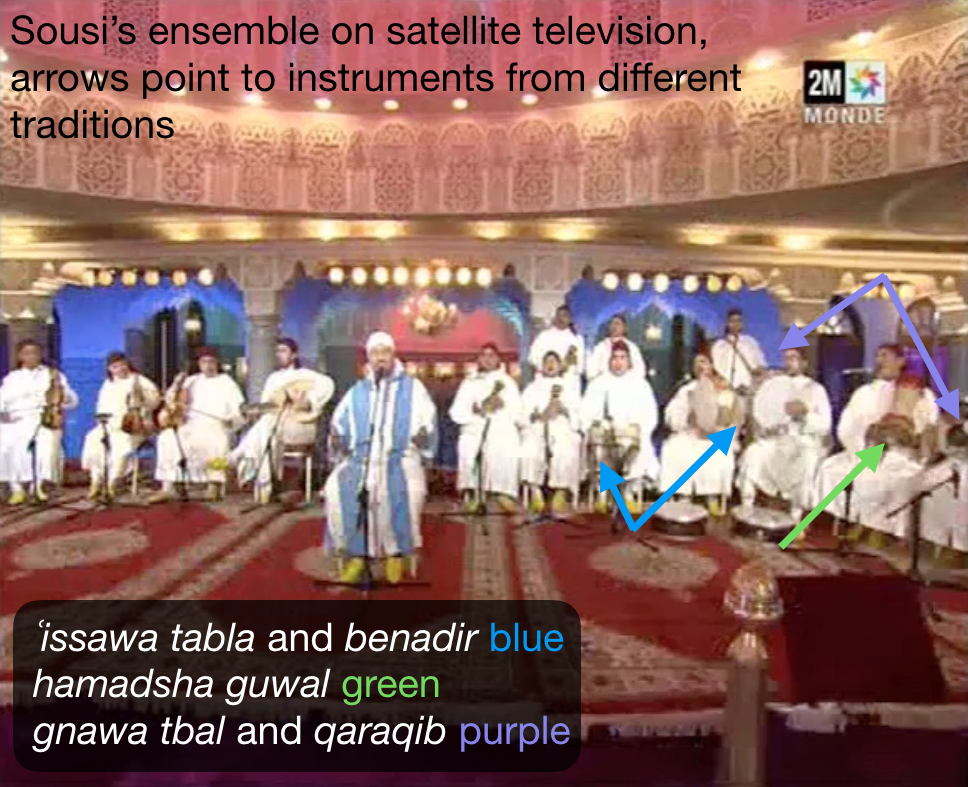] --- class: middle, center <iframe width="560" height="315" src="https://www.youtube.com/embed/rdqCkEkrxcY?si=Ltk4DYpMdoQeP-y1" title="YouTube video player" frameborder="0" allow="accelerometer; autoplay; clipboard-write; encrypted-media; gyroscope; picture-in-picture; web-share" referrerpolicy="strict-origin-when-cross-origin" allowfullscreen></iframe> <!-- <video width="560" height="360" controls> <source src="/assets/muhammed-sousi-lutfiyya-short.mp4" type="video/mp4"> <source src="/assets/muhammed-sousi-lutfiyya-short.ogv" type="video/ogg"> </video> --> ### Muhammed Sousi: "Zaynab" --- class: title, center, middle # Moroccan Ritual Interactions  ### Christopher Witulski, Ph.D. ### College of Musical Arts