class: title, center, middle # Trace in Morocco  ### Christopher Witulski, Ph.D. ### College of Musical Arts --- # Introduction * Understanding the ephemeral nature of trance and its methodological limitations * Concentration on Moroccan events, acknowledging the complexity of studying trance --- # What trance is/might be * Definitions: Trance, altered states, ecstasy, possession, flow * Key Concepts * Rouget (1985): Away from deterministic ideas (rhythms, intensities), binary of trance and ecstasy * Becker (2004): Trance as a process of learning and cultural conditioning, something done instead of something that is * Jankowsky (2007): The looseness of trance definitions * Herbert (2011): Trance and altered states as equivalent * Trance in Ethnomusicology: Better studied in public ceremonies, highlighting the importance of ritual * Almost exclusive focus on "high arousal" trance --- # What about individual experience? * Flow State: Drawing from psychology research (e.g., Mihály Csíkszentmihályi) * Music and Mysticism: Connection to spiritual oneness across diverse traditions * Being "in a trance," perhaps your mind taking a break? ### Cessation of inner language -- ### Does that feeling of getting home without remembering the travel relate to spirit possession trance? How? -- ### What about falling into music? --- # Outline * Focus: Moroccan sacred practice as one set of examples to show the range * Structure: * About these practices and my work within them * The role of intention and criticism in trance practices * Trance in European history and neuroscience perspectives --- # Introducing Trance in Morocco * Overview: Trance in Moroccan music and healing practices (e.g., Hamadsha, Issawa, Gnawa) * Key Concepts: * Hal and Jadba: Spiritual states in Sufi traditions * Baraka: The divine energy in trance rituals * Context: The intertwining of music, spirituality, and healing * Vulnerability to criticism * Marginalized community histories * Marginalized beliefs and practices * Inconsistent understandings of the identity of spirits --- # Morocco * Part of North Africa, Africa, Mediterranean, Middle East… Tricky to place .image-100[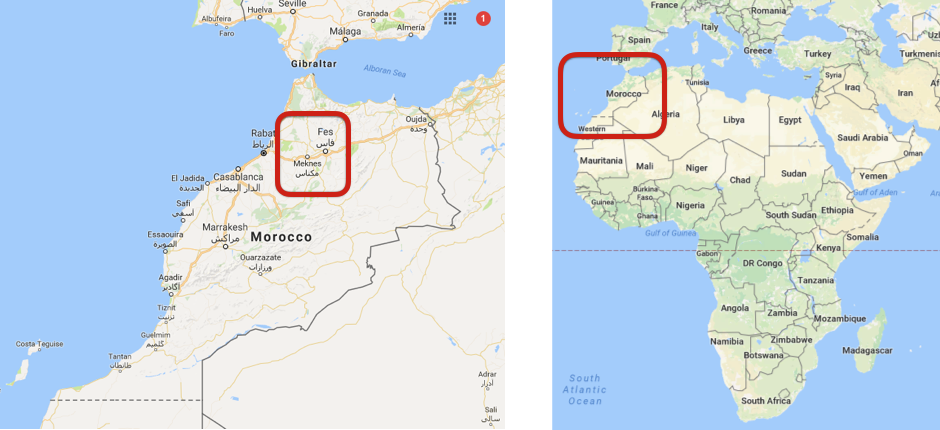] --- # The Gnawa .image-80.center[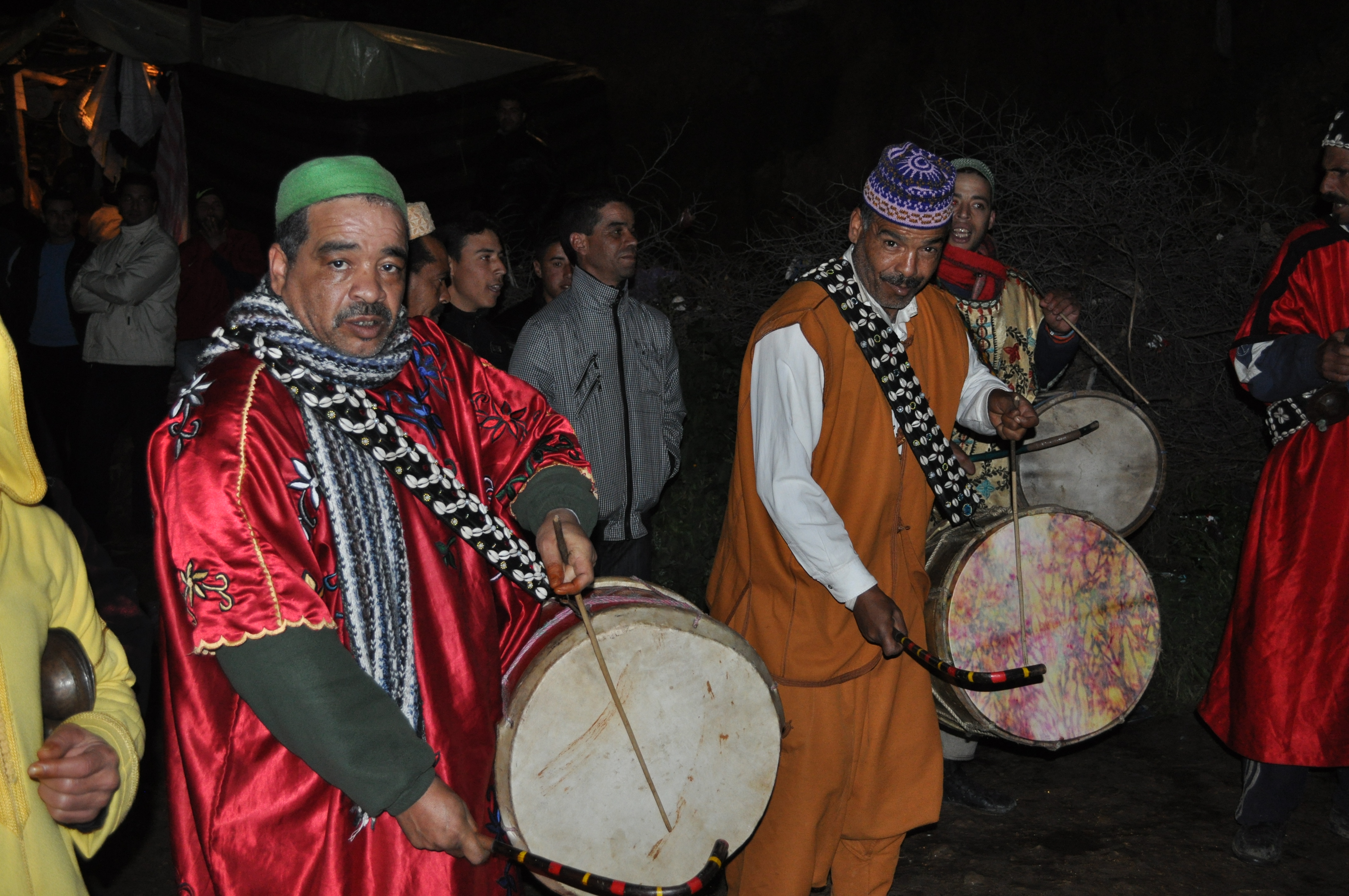] .center[### Abd al-Rzaq and his brother Hamid during a procession in Sidi Ali] --- # The Gnawa .image-80.center[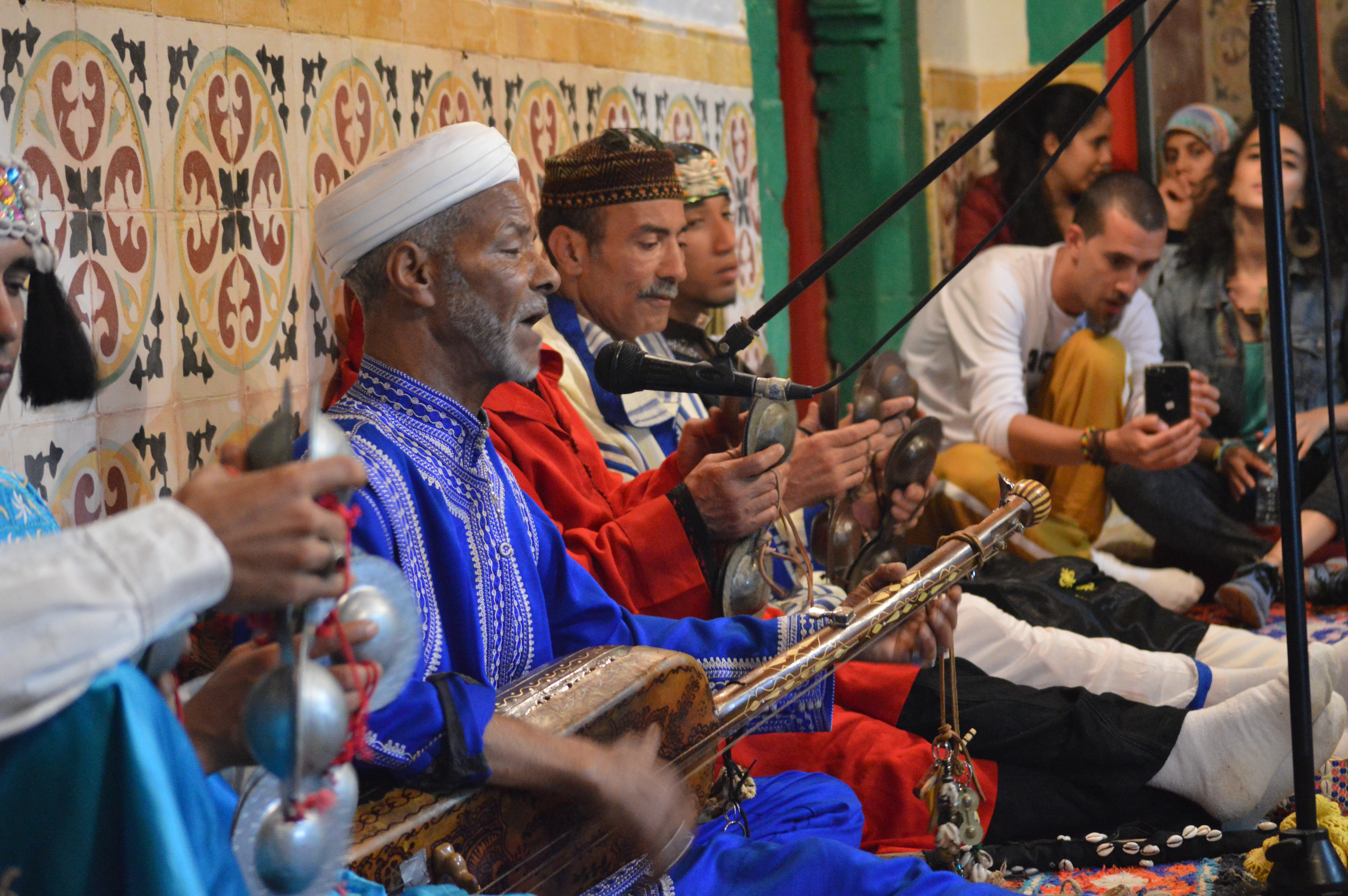] .center[### Celebration of Mahmoud Guinia's life in Essaouira] --- # The Gnawa .image-40.image-float-right[] .center[ <audio controls="controls"> <source src="/assets/lalla-aisha-trance.wav" type="audio/wav"> </audio> ### Abd al-Rzaq leading "Aisha Hamdushiyya" in a ritual in Meknes (photo from a different event) ] --- class: middle, center <video width="560" height="360" controls> <source src="/assets/innov-gnawa-toura-toura.mp4" type="video/mp4"> <source src="/assets/innov-gnawa-toura-toura.ogv" type="video/ogg"> </video> ### Innov Gnawa: Toura Toura --- class: middle, center <video width="560" height="360" controls> <source src="/assets/hamid-el-qasri-studio-2m-2011.mp4" type="video/mp4"> <source src="/assets/hamid-el-qasri-studio-2m-2011.ogv" type="video/ogg"> </video> ### Malem Hamid al-Qasri on Studio 2M (2011) --- # Trance and Altered States in European Art Music History * Historical Bias: Marginalization of trance in European history * Trance in Popular Culture: Influence on music genres and community building * Clinical Relevance: Trance and music in palliative care and therapy --- # A European context .image-50.image-float-right[] * Trance and health: Franz Mesmer (d. 1815) * Magnetic fluid permeates earth and bodies * Causes illness when blocked * Healed as well as an exorcist, both used trance * “Mesmerized” * Often also meant controlled (by a male) * Mesmer and others reputed to take advantage * Two legacies * Taken up by future psychoanalysts like Freud * Sideshows and occultism --- # Primitivism, colonialism, modern biases * Methodology Challenges * European biases and their impact on trance studies * Comparative analysis and its ethical concerns in ethnomusicology * The difficulty of making interdisciplinary connections * How these relate in Morocco * [Samuel Llano's 2023 piece on Spanish colonialism](https://www.worldmusictextbook.org/chapters/llano-2023) and trance as part of the colonial project * Claims about these practices within Morocco (between "modernism" and "fundamentalism") * Trance and Faith * Comfort within a lack of certainty * Prioritizing understanding, whatever that might mean --- class: title, center, middle # Trace in Morocco  ### Christopher Witulski, Ph.D. ### College of Musical Arts